Table Of Content

Howe roof trusses are traditionally made from a combination of wood and steel. The primary structure includes wood, but the tension members and vertical members of Howe trusses are made out of steel. In addition to supporting the overall structure of the roof, they also determine the shape of the roof and ceiling below. They are manufactured using lightweight materials, such as 2x4s, and are then shipped to the construction site. Cut roofs were relatively easy to construct, though, as manufacturing technology advanced, architects discovered a better way to build roof frames – the truss.
How Truss Loads Can Be Combined?
It also acts as a weather tight shell which can be erected quickly as the structures are readymade and save a lot of labor cost. These trusses are used on pitched or peaked roofs and are one of the most popular types. They offer great support, and they can be used on fairly large buildings (commercial or residential). You won’t be surprised to hear that flat trusses are used for buildings with flat roofs. They look very similar to floor trusses, but they still provide a great deal of support.
How can I build a simple roof truss?
Roof trusses provide the structural support for a home's roof, supporting the roof deck material, insulation, and any loads that are placed on the roof. As a result, they have to be strong enough to withstand wind, rain, snow, and any other types of weather that your region might be prone to. Roof pitch impacts the overall design and materials, with steeper pitches providing better water and snow shedding capabilities but requiring more substantial structural support. The shape of the truss affects both architectural style and the roof’s interior volume. Material selection, commonly wood or steel, hinges on structural requirements, local availability, and budget. Spacing is often more or less arbitrarily chosen because of its suitability for a particular roof and wall construction or building function.
Roof Truss Calculator / Joist Calculator
We kick our epic roof truss guide with an overview diagram chart illustrating the different roof truss names. Don't worry if you're unsure of what exactly such terms mean, such as the roof's run, rise, on-center spacing, etc. We illustrated the variables you need to fill out in the calculator. You can choose the rise of the roof (which is its height) or the roof pitch (which is the slope created by the rafter). If you want to learn more about the way it's calculated, check out our roof pitch calculator. Trusses are utilized for stabilizing and supporting the walls, particularly in huge buildings that have more than one to two stories.
How to build roof trusses
Purlins are used for small roofs which are covered with steel roofing. Trusses can be customized according to the requirement and thus serve as a simplified way of roofing. Steel roof truss design example is evident in the major structures built across the globe. This is because the pitch of a roof depends solely on the roof truss. With the ever increasing demand to optimize the land, the builders are looking towards such type of roof trusses which provide a solution to every requirement.
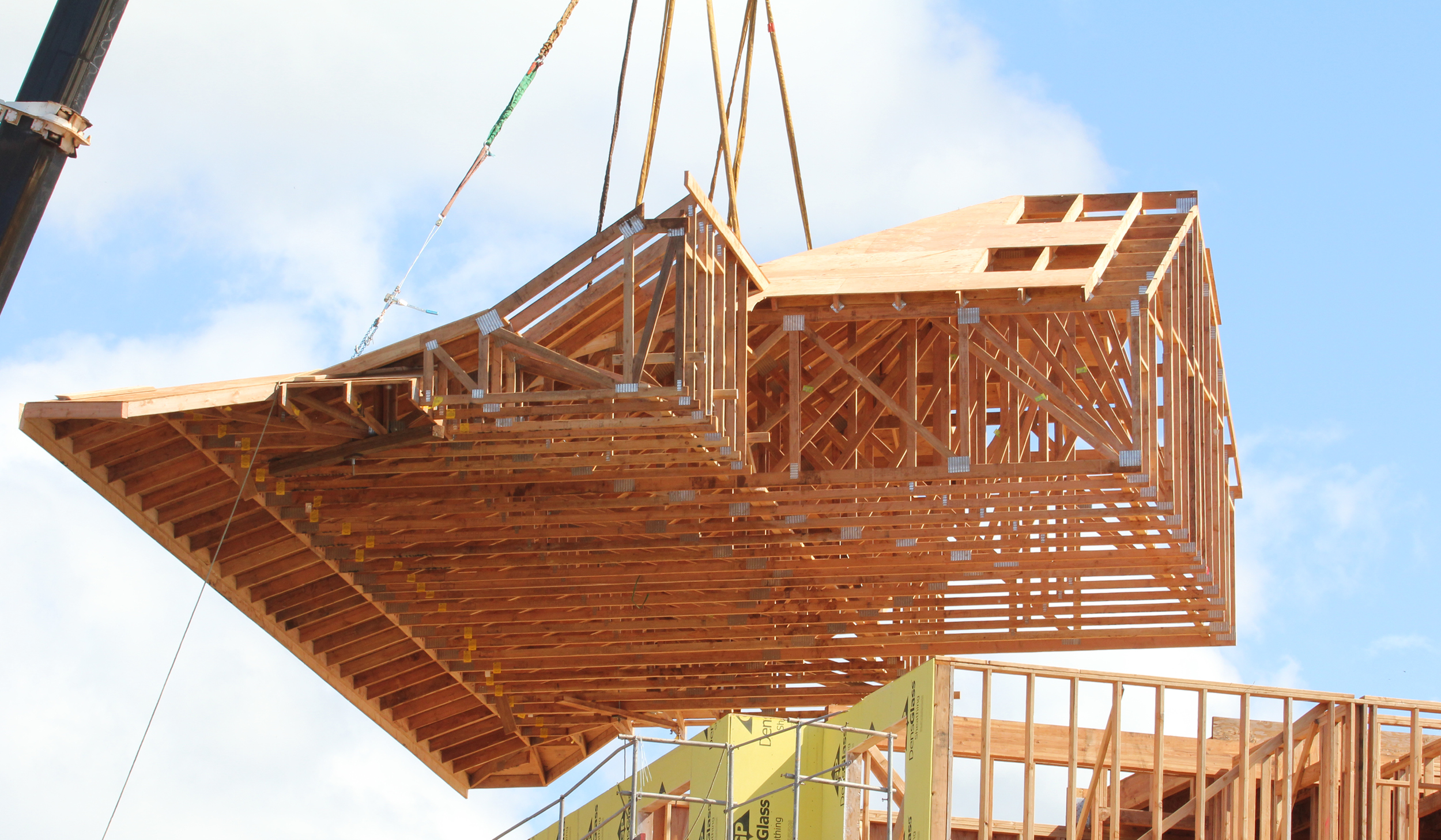
We build each truss by hand specifically for your job, then ship it upright for strict quality assurance. Instead of having 1 king posts, this truss has 2 queen posts – the 2 vertical bars. The line load leads to compression 🔵 in the rafters and the stuts, while the bottom beam and the king post act in tension 🔴. A tie beam supports the struts and the king post at midspan, transferring the loads to the supports.

Open Web Trusses built to last and to order
The line load leads to compression 🔵 in the top chords and the diagonals inclined towards the outside, while the bottom chord and diagonals inclined towards the center act in tension 🔴. Compared to the king post truss has the Queen Post Truss less diagonals and more vertical members. When used as a roof structure, the loads are applied on the top chord of the truss.
A. Overview diagram of the different types of roof trusses with names and pictures
This includes lateral bracing along the bottom chord and diagonal bracing in the planes of the top chord and web members. This step is critical for preventing accidents and preserving the structural integrity of the trusses until permanent bracing is added. Successful truss installation hinges on precise planning and execution. Begin by verifying the accuracy of the truss design blueprint against the actual building measurements to prevent alignment issues.
Mono Scissors
Otherwise special bearing details or wall framing should be provided to relieve the thrust. The truss analysis is being performed by our FEA solver, which is also used in our Structural 3D program. The calculations made are based on splitting the member into 10 smaller elements and calculating the internal forces based on these. The Truss solver can handle extremely large structures of more than 10,000 members. So if you have a larger structure, simply upgrade and you can use the full S3D program for all your analysis needs.
Each truss type has its unique structural nuances, affecting factors such as weight distribution, span capabilities, and overall cost. The bracing should be designed and detailed with the same care as the truss itself and not left to the judgment of the contractor. The bracing requirements here suggested are minimums, and are not dependent on actual lateral-load analysis or on local code requirements. Vertical cross-bracing should be installed at the bottom chord at the location of the vertical bracing and be continuous from end. Indeterminate structures, such as rigid frames or continuous trusses, are not frequently used in timber.
Builders will lay out a series of roof trusses, standing them upright and securing them to the exterior walls at regular intervals. As the home build continues, builders will attach sheathing, underlayment, and the roof on top. A roof truss is a prefabricated structural framework that builders can install on top of an in-progress home to support the roofing materials and give the roof its final shape. It looks like a hollow triangle with an array of lines and triangles within a larger frame. For the wind load, we will be using wind pressure calculation for components and cladding (Chapter 30 of ASCE 7-16). We will be using the SkyCiv Load Generator to calculate the wind loads acting on the roof trusses.
Now, that you got an understanding of what type of trusses we use in structural engineering, you can learn about loads, because every truss is exposed to loads. Loads such as self-weight and live load apply on the top chord, which then distribute the loads through the various members down to the 2 supports. Compared to the previous trusses, are flat trusses used in buildings to support floors. The number of trusses required for a roof depends completely on the design. However, typical roof truss spacing means that they are usually 400mm (16 inches) or 600mm (24 inches) from centre – this means from the centre of one truss to the centre or the next truss.


No comments:
Post a Comment